What to Eat Before Gymnastics Practice (and Why Your Gymnast Won’t)
explore the blog
free check

The Podcast
Learn to fuel the gymnast for optimal performance and longevity in the sport.
Is your gymnast UNDERFUELED?
Figure out if your gymnast is getting what she needs nutrition-wise to stay healthy or NOT (and what to do about it)
looking for...?
What to eat before gymnastics practice is one of the most common questions I get from gymnast parents. And right behind it: “But what do I do when she won’t eat ANYTHING before practice?”
Here’s the thing. Most gymnasts who skip fuel before practice aren’t missing information. There’s usually a reason behind it, like a nervous stomach, a 5:30 AM alarm, or worries about feeling “heavy” or how she looks in a leo. In this post, I’ll walk you through the most common reasons gymnasts don’t eat before practice, what to eat before morning and afternoon workouts, how much she actually needs, and when skipping fuel is a red flag.
By Christina Anderson MS, RDN, CSP, CSSD · Updated October 2026
Why won’t my gymnast eat before practice?
Let’s talk about the reasons I hear most often. See if any of these sound familiar.
1. “I’m not hungry”
We’re taught to eat when we’re hungry and stop when we’re full. There’s nothing wrong with that, but fueling a sport is more than hunger and fullness. Hard training blunts the appetite, and a lot of gymnasts just aren’t hungry right when they wake up. If practice starts at 7 AM, she doesn’t have the luxury of waiting until she feels hungry. She’ll need to eat for the work ahead of her, not for her hunger cues.
2. She can’t (or won’t) get up in time
Sound familiar? She gets into bed at 10, checks her phone “one more time,” and suddenly it’s almost midnight. Then she sleeps until the last possible minute and runs out the door with nothing. This is SO common, and it hurts recovery, focus and appetite. Sometimes the fix is a little tough love: phones out of the bedroom and an earlier bedtime. (More in Is Your Gymnast Getting Enough Sleep?)
3. A nervous stomach or fear of getting sick
Some gymnasts feel nauseous before hard practices, or worry about throwing up or needing the bathroom mid-workout. Nerves really do show up in the gut. The gut is sometimes called the “second brain,” and we’ve all felt butterflies before something stressful.
I’ve been there. When I was a young gymnast, I would get nervous before hard practices and stopped eating breakfast. I’d feel shaky and sluggish and could barely make it through conditioning. I thought I just needed to “try harder,” but in reality my body needed fuel.
The good news? This is very fixable. It usually comes down to timing (enough time to digest), the right foods (lower in fat and fiber), and practice. The gut can be trained to handle food before and during exercise. Sometimes nerves also need support from a therapist, and that’s OK. I recommend it to a lot of my high-level gymnasts. (More in Gymnasts and GI Issues.)
4. She feels “heavy” at practice
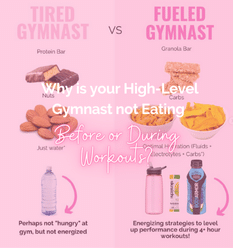
Many gymnasts skip food because they’re afraid of feeling “heavy.” Here’s what I see with my elite clients: the gymnasts who feel heavy and sluggish are usually the ones NOT fueling. The other common culprit is eating the wrong things before practice. A lot of gymnasts reach for nuts or protein bars because carbs feel “taboo,” and those just don’t break down fast enough to fuel gymnastics.
5. She thinks training on an empty stomach “burns more fat”
This myth is everywhere in fitness culture. Yes, the body burns a little more fat for fuel during fasted exercise, but that is NOT the same as losing body fat. For girls and women especially, fasting adds stress to the body. Stress hormones like cortisol lead to muscle breakdown and water retention, the exact opposite of what a gymnast trying to “lean out” wants. Fueling well is one of the best tools we have to lower that stress.
6. She’s worried about her weight or her stomach “pooching out”
Some gymnasts don’t want to eat or drink before practice because they’re worried about how they look in a leo, or because they get weighed at the gym. A coach weighing gymnasts before practice is SO inappropriate. Coaches aren’t trained to make health decisions based on weight. That’s the job of the pediatrician and a registered dietitian.
And a full stomach after eating is NOT fat gain. It’s normal digestion, and it’s harmless.
Weight worries are also easy to hide. She might tell you she “isn’t hungry” or has a “nervous stomach” when the real reason is that she’s trying to stay small. (More on this in How Much Should a Gymnast Weigh?)
7. Nobody else on the team eats
Teens don’t want to be singled out. If none of her teammates eat before practice, she probably won’t either. And some gyms don’t allow anything but water at 4+ hour practices, which goes against everything we know about how the body uses fuel during exercise.
Why fuel before practice matters
The body stores carbohydrate as glycogen in the muscles and liver, and gymnastics runs mainly on carbohydrate. Kids and teens can store less glycogen than adults, so a big pasta dinner the night before won’t cover a 4-hour practice the next day. If she starts practice on empty, she runs low sooner, and the body starts breaking down protein (including muscle) for fuel. That’s why sports nutrition guidelines recommend carbohydrate in the hours before exercise (Thomas et al., 2016).
Fueling before practice helps her:
- Have energy through the end of practice
- Stay focused (the brain runs on glucose too)
- Recover faster afterward
- Lower her risk of injury from fatigue
Why breakfast is non-negotiable for gymnasts
Overnight, the body is busy repairing from the day before. By morning, she needs fuel. A few things I tell families:
- Waking up starving every day is a sign of underfueling. It’s normal to wake up ready to eat, but ravenous every morning means she likely isn’t eating enough during the day.
- Skipping breakfast backfires. It sets her up to be extra hungry in the afternoon and evening and can lead to nonstop snacking after practice.
- A good breakfast includes carbs, protein and some fat. Dairy like milk, yogurt and cheese is a great way to get carbs, protein and calcium in one food.
For a morning practice, breakfast IS the pre-practice meal, so the rules below apply.
What to eat before gymnastics practice
When you’re figuring out what to eat before gymnastics practice, the goal is easy-to-digest carbohydrate, with a little protein or fat for staying power. Keep fat and fiber lower right before practice, because they slow digestion.
How much?
A good starting point is about 1 gram of carbohydrate per kilogram of body weight about an hour before practice. To turn pounds into kilograms, divide by 2.2.
| Gymnast’s weight | Carbs before practice (about 1 g/kg) |
|---|---|
| 60 lbs (27 kg) | about 27 g |
| 75 lbs (34 kg) | about 34 g |
| 90 lbs (41 kg) | about 41 g |
| 105 lbs (48 kg) | about 48 g |
| 120 lbs (55 kg) | about 55 g |
For reference: 2 slices of toast have about 30 g of carbs, a medium banana about 27 g, a cup of milk about 12 g, and a plain bagel about 50 g.
This is a starting point, not a prescription. Her exact needs depend on her age, size, how long and hard she trains, and when she last ate.
Before morning practice
Early practices are the hardest, so keep it simple. If she can’t stomach a full breakfast, that’s OK. Get the carbs in now and make up the rest of the energy later in the day.
- Toast or a bagel with peanut butter
- A banana with a glass of milk or chocolate milk
- Greek yogurt with fruit and granola
- A waffle with a drizzle of syrup and a cheese stick
If she only has 15-30 minutes, go lighter and more liquid, like juice, chocolate milk, applesauce or a banana. Liquids and simple carbs leave the stomach faster. A protein-rich bedtime snack the night before can also help gymnasts who struggle to eat early.
For more ideas, see our Top 5 Pre-Competition Breakfasts for Gymnasts. They work for early practices too.
Before afternoon practice
For an afternoon practice, lunch does a lot of the work. Then add a pre-practice snack about an hour before she walks into the gym, especially if lunch was 3+ hours earlier.
- Crackers and a cheese stick
- A peanut butter and jelly sandwich
- Pretzels and fruit
- A granola bar and a glass of milk
More ideas in The Best Snacks for Competitive Gymnasts.
What about during practice?
For practices 3.5 hours or longer, she’ll need easy carbs during practice too, starting about 1.5-2 hours in. That’s when her stored energy starts running low. For a 3-hour practice, she may need 0-1 small carb snack depending on her level and how hard practice is. Skip the fat, fiber and protein during practice, since blood flow to the stomach is lower and those slow everything down.
Think sports drink, juice, applesauce pouches, fruit snacks, dried fruit or pretzels. Yes, even candy works. A gymnast eating mostly nutritious foods can absolutely fuel with Skittles mid-practice. You and your gymnast are not “better” for using dates instead. Both get the job done. (More in Intra-Workout Carbs for Gymnasts and Do Gymnasts Need Sports Drinks?)
When not eating before practice is a red flag
Sometimes skipping fuel is about more than nerves or a busy morning. Look closer if your gymnast:
- Used to eat before practice and stopped
- Refuses carbs or anything with sugar, even during long practices
- Won’t eat when her “safe” or “clean” foods aren’t available
- Weighs herself before and after practice, or several times a day
- Talks about her body, “good” and “bad” foods, or needing to be smaller
These can be signs of disordered eating, including orthorexia (an obsession with eating “clean” or “pure”). This isn’t a nutrition knowledge problem. She needs a team: a sports dietitian trained in eating disorders, a therapist and her doctor. (See Signs Your Gymnast Is Struggling with Disordered Eating.)
Frequently asked questions
About an hour before for a snack, or 2-4 hours before for a full meal. If she only has 15-30 minutes, choose liquids and simple carbs like juice, chocolate milk or applesauce, which digest faster.
Easy-to-digest carbs with a little protein, like toast with peanut butter, a bagel, or a banana with a glass of milk. Even a small breakfast is better than nothing, and she can make up the rest of her energy later in the day.
Start small. Liquids like chocolate milk or juice are often easier than food first thing in the morning. A bedtime snack the night before helps too. Over time, her body adjusts to eating before practice.
For competitive gymnasts, yes. She’ll run out of stored carbohydrate sooner, which means more fatigue, poorer focus, slower recovery and a higher risk of injury late in practice.
A little, yes. Some protein in the pre-practice snack helps with staying power and recovery. Just keep it modest, because carbohydrate is her main fuel and too much protein, fat or fiber slows digestion. (More in How Much Protein Does a Gymnast Need?)
Help your gymnast fuel for practice
Knowing what to eat before gymnastics practice doesn’t have to be complicated. Most gymnasts need the right foods, the right timing, and someone to help them work through what’s getting in the way.
Not sure if your gymnast is eating enough? Take our free Underfueled Gymnast Check. And if you want more than a generic meal plan, The Balanced Gymnast® Program is our 1:1 program, built by a former gymnast, nationally rated NCAA/USAG judge and pediatric sports dietitian who lives and breathes this sport. We build her plan around HER: her practice schedule, her stomach and the foods she actually likes. For more on fueling the whole day, see our complete guide to nutrition for gymnasts.
on the blog