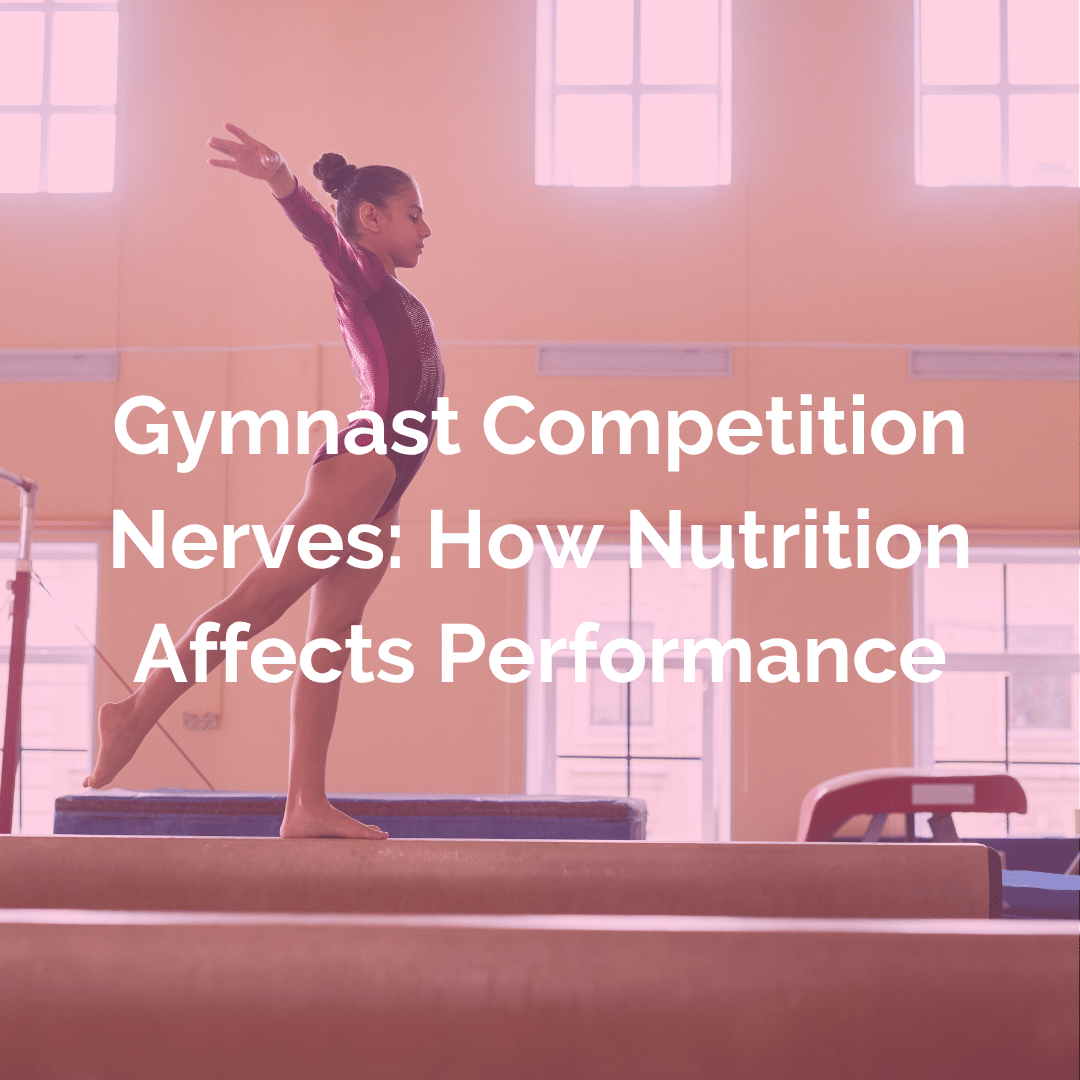
Gymnast Competition Nerves: How Fueling Helps Her Compete Like She Practices

Do gymnast competition nerves get the best of your gymnast? When we asked parents what their gymnast’s biggest challenge is on competition day, they overwhelmingly said “nerves.” Nerves make her compete differently than she practices. A lot of gymnasts struggle to eat the day of a meet, or don’t eat the right thing the night before (because of nerves or just lack of a plan). Parents also tell us their gymnasts are too tired to use any of the mental training they’ve done, because they haven’t fueled.
Here’s the thing: nutrition won’t make nerves disappear, but an underfueled brain makes them a whole lot worse. Let’s talk about how fueling affects the brain, why nerves shut down her appetite, and what to do on meet day so she can compete the way she practices.
By Christina Anderson MS, RDN, CSP, CSSD · Updated October 2026
Why nutrition matters for gymnast competition nerves
A lot of gymnasts think it doesn’t matter if they don’t eat much on meet day, because they’re only warming up and competing four routines of less than two minutes each. It’s true she doesn’t need as much fuel on meet day as she does for a 4-5 hour practice. But that doesn’t change her need for brain fuel.
The brain is one of the most energy-hungry organs in the body. It uses about 17% of daily energy needs, which is roughly 400-500 calories a day for a high-level gymnast. It also uses at least 130 g of carbohydrate a day in the form of glucose. That’s why the first step in battling competition nerves can start with her nutrition.
What happens when the brain is underfueled
When the brain doesn’t have enough carbohydrate available, something called neuroglycopenia can happen: a shortage of glucose in the brain that changes how neurons function. Symptoms include:
- Sudden mood or behavior changes
- Irritability
- Fatigue
- Nausea and headache
- Shakiness
- Poor focus
This is why young gymnasts often develop an “attitude” or get moody toward the end of a long 4+ hour workout. They haven’t suddenly become “uncoachable.” Their brain isn’t getting the glucose it needs to regulate mood and emotions amid all that physical work. And that lack of emotional regulation can absolutely feed nerves at a meet.
Chronic underfueling (and REDs) goes further: prolonged fatigue, poor sleep, anxiety and depression. When the body is short on fuel, gymnasts can become more rigid, fearful, stressed and anxious. Those are exactly the issues gymnasts seek mental performance support for, and yet fueling is so often overlooked. Even with a great sports psychologist, an underfueled gymnast can’t fully use those strategies.
The gut-brain connection: why nerves kill her appetite
A lot of gymnasts struggle with a “nervous stomach” before practice or competition. They refuse to eat or drink out of fear of nausea, diarrhea or throwing up. These fears are real. The gut is home to the enteric nervous system, so there’s a direct link between thoughts, feelings and how her stomach feels. When she’s nervous, her body shifts into fight-or-flight, and digestion becomes a low priority.
The good news? The gut is trainable. With practice, it can handle normal amounts of food and fluid during training and competition. Strategies like box breathing and the skills taught by sports psychologists and therapists work hand in hand with nutrition strategies. A fueled gymnast can use BOTH her mental training and her nutrition to fight back when nerves start. (For a deep dive, see Nervous Stomach and Competition Nerves in Gymnasts.)
How to fuel a nervous gymnast on meet day
- Don’t skip breakfast, even for early sessions. If she can only get one thing down, make it carbs.
- Pair carbs with a little protein if her stomach is touchy. Research on nausea found carbs plus protein beforehand eased symptoms more than carbs alone or no food at all.
- Go liquid if solid food won’t go down: a smoothie, chocolate milk, juice or a sports drink.
- Eat small and often instead of one big meal.
- Pack familiar, easy-to-digest carbs for between events, like applesauce, fruit snacks, pretzels or a sports drink.
- Practice it first. Use the same foods before stressful practices and school days so they feel “safe” on meet day.
For the full plan, see What to Eat Before a Gymnastics Meet, and if she flat-out refuses, listen to What to Do When Your Gymnast Refuses to Eat Before a Competition.
Fatigue: the hidden side of nerves
One of the main purposes of sports nutrition is to reduce fatigue, which often gets in the way of performance. Fatigue can be something she perceives, like a skill or routine that suddenly feels harder than normal. Or it can be a real drop in force or power, like when she can’t get her legs to run fast enough down the vault runway.
Athletes who use nutrition to lessen fatigue will outperform and out-practice their competition. That’s how gymnasts get the “edge” that separates the good from the best. (Sleep matters here too: see Gymnast Sleep.)
Breakfast and brain power
Studies have shown that kids who eat breakfast before cognitive tasks (like math problems) perform better than kids who are still fasting from overnight. That translates straight to the gym. High-level gymnasts are doing highly technical skills, and they need their brains turned on, especially for two-a-days and early competition sessions. Skipping breakfast can even hurt afternoon and evening performance, even if she eats lunch.
Skipping breakfast also makes it easy to fall behind on fueling for the whole day, which hurts recovery and performance. Some gymnasts worry that fueling will affect their weight or body composition. But research shows that eating regular, evenly spaced meals and snacks (within-day energy balance) supports better body composition than eating a ton later in the day. A study of adolescent high-level gymnasts found that those who spent more of the day in an energy deficit actually had more body fat and less lean mass.
Carbs: a legal performance booster
Numerous studies show that carbs during exercise help prolong performance and lower perceived exertion. Even having carbohydrate in the mouth, where digestion begins, improves performance and how hard exercise feels. By fueling with carbs during a meet, a gymnast feeds her body AND her mind, and takes back some power from competition nerves. (More in Are Carbohydrates Bad for Gymnasts?)
Nutrients that support brain function
Gymnasts often ask which specific foods will boost performance. The unsexy answer is always “enough food.” Once she’s fueling well, a few nutrients matter for the brain:
- Iron: low iron can cause fatigue and “brain fog.” High-level gymnasts should have levels checked regularly.
- Vitamin D: important for brain function, and low levels are linked with anxiety, depression and fatigue. (See gymnast bone health.)
- Protein: supports repair and recovery. (See How Much Protein Does a Gymnast Need?)
- Omega-3s: help manage inflammation and support brain health, including concussion recovery.
- Choline: found in egg yolks, so eat the whole egg!
- B vitamins: the “energy vitamins,” found in whole grains, meat, dairy, eggs and beans.
Before adding supplements, test, don’t guess, and work with a professional. Food comes first.
Frequently asked questions
Yes. Nutrition won’t make nerves go away, but an underfueled brain makes anxiety, irritability and poor focus worse. Eating enough, especially carbs, helps her use her mental training on meet day.
Familiar, easy-to-digest carbs with a little protein, like toast with peanut butter, a smoothie, chocolate milk or yogurt with fruit. Liquids and small, frequent bites are easier when her stomach is in knots.
Nerves trigger the fight-or-flight response, which slows digestion and shuts down appetite. The gut is trainable, so practicing meet-day foods before stressful practices helps.
No. Even though a meet is shorter than practice, her brain still needs fuel. Competing on empty can cause shakiness, fatigue, poor focus and more anxiety.
Get help for your gymnast
Fueling her body AND her brain is essential for performance and longevity in the sport, especially when competition season gets hectic. Not sure if your gymnast is fueling enough to compete her best? Start with our free masterclass or take the free Gymnast Fueling Quiz. And if you want more than a generic meal plan, The Balanced Gymnast® Program is our 1:1 program, built by a former gymnast, nationally rated NCAA/USAG judge and pediatric sports dietitian who lives and breathes this sport. We build her plan around HER: her meet schedule, her nerves, her training and the foods she actually likes, so she can close the recovery gap each and every day.


on the blog