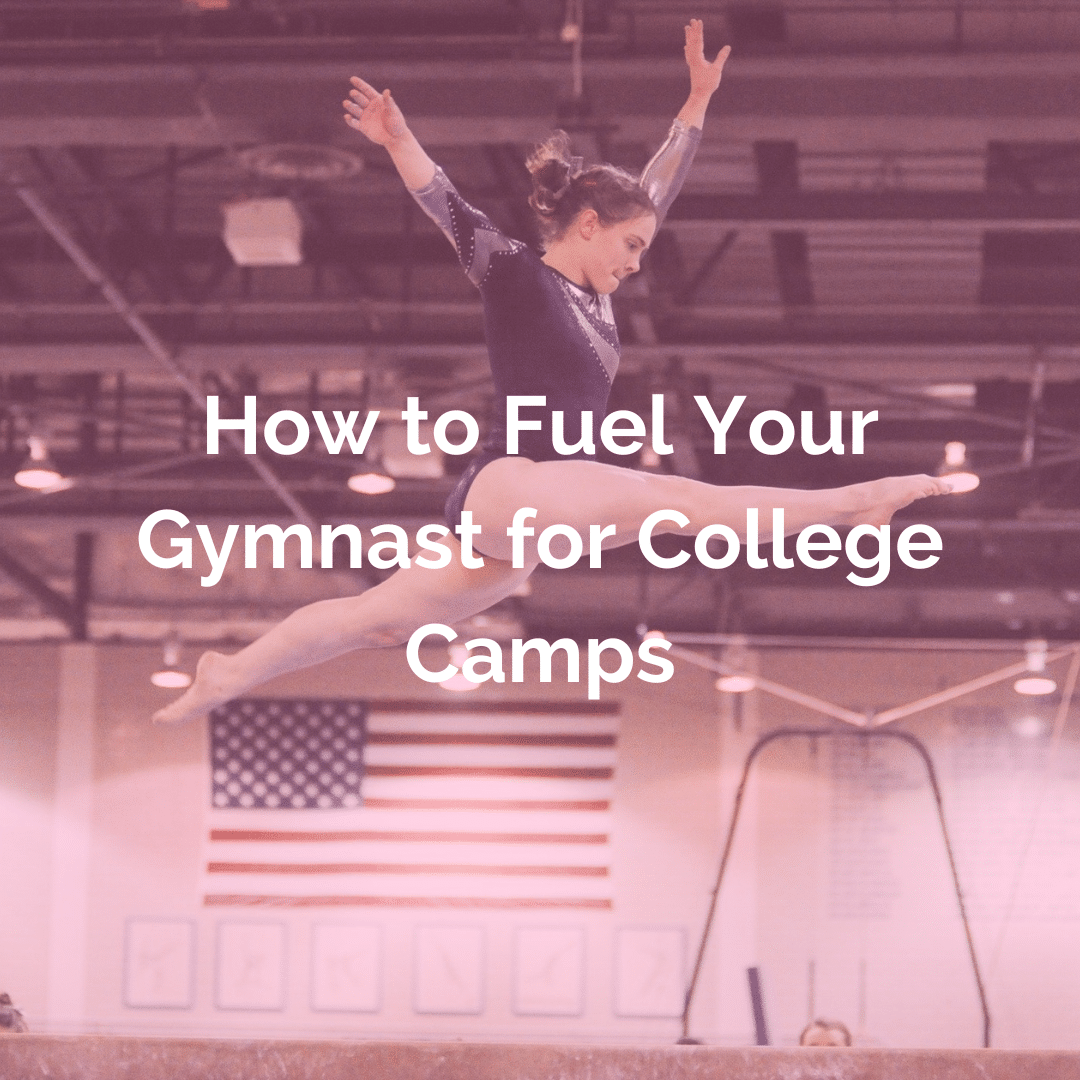

College gymnastics camps are not just fun anymore, especially if your gymnast is a Level 9 or 10 with her eyes on collegiate competition. These camps are auditions. Every practice session is a chance to be seen, remembered, and recruited.
And here is the thing most parents do not realize: how your gymnast fuels her body will directly affect how she performs and how she is perceived.
This post covers exactly what you need to know to send your gymnast to camp fully fueled and ready to stand out.
Why Nutrition Is a Recruiting Advantage
Let me share a story from a client last summer.
She was a first-year Level 10 at a high-performance college camp, a school she was genuinely interested in. She had a long-time competitor who was also there. Both were talented. Both were being watched.
When my client’s mom came to pick her up, the coaches were raving. She tried new skills, worked on double back, threw release moves on bars. They could not say enough good things.
Meanwhile, my client overheard those same coaches telling her competitor’s parent: “She did well, but she really tired out toward the end. She had a hard time in that last hour.”
That was the first thing they said. Not about her skills. Not about her potential. That she ran out of gas.
That is not just an off day. That is an impression, and it sticks.
What This Means for Your Gymnast’s Recruiting Chances
College coaches are building mental files on every gymnast they see at camp, even if recruiting conversations are still years away. A gymnast who shows up energized, coachable, and strong through the final hour of a four-hour session leaves a very different impression than one who fades.
The good news? Fueling is one of the few variables in this sport that is fully within your control.
The #1 Mistake Gymnasts Make Before Camp
You cannot eat well the night before camp and expect it to matter.
Proper fueling for performance is cumulative. It builds over days and weeks, not hours. If your gymnast has been under-fueling, even while eating “healthy,” she will feel it when it counts.
There is an important distinction here that trips up a lot of gymnasts and parents that I always talk about: eating healthy is not the same as fueling adequately.
Coaches talk to gymnasts about avoiding sugar and processed food. Gymnasts hear “eat clean.” But what they often miss is that volume and carbohydrate adequacy matter just as much, and arguably more, for performance.
The Truth About Carbohydrates and Gymnast Performance
Research shows that low carbohydrate availability can produce many of the same symptoms as Relative Energy Deficiency in Sport (REDs), even when total calories appear sufficient. We are talking fatigue, poor concentration, sluggish performance, and emotional dysregulation — the exact things that make a gymnast look unprepared at camp.
Ironically, carbohydrates are the most feared food group in gymnastics culture, and yet they are the most critical for performance, especially at the Level 9, 10, and elite levels where training intensity is high.
If your gymnast is restricting carbs because a coach told her to, or because she has absorbed the “clean eating” messaging around her, this is worth addressing before summer camps begin.
Learn more about what adequate fueling really looks like in this guide to nutrition for competitive gymnasts.
3 Key Nutrition Strategies for Gymnastics College Camps
1. Treat Camp Prep Like Competition Prep
Prepare for camp nutrition the same way you prepare for a meet. Most families focus heavily on competition-day fueling and let camp nutrition be an afterthought. That is a mistake, especially when these camps carry recruiting weight.
College gymnastics camps typically run two sessions per day, sometimes three to four hours each, and the schedule varies day to day. Lunch breaks are short. Snack timing is unpredictable. Your gymnast needs to already know:
- What her pre-workout meal looks like
- What kind of lunch she can handle between two sessions
- Which intra-workout snacks work for her body and her digestion
- How to make smart choices when the camp provides food
This is not something to figure out on Day 1. It is something to practice in training weeks before camp starts. Gymnast nutrition for two-a-day practices at camp is not the time to experiment with new foods or skipped meals.
2. Know What to Eat (and What to Avoid) at Camp
Many camps provide lunch. The quality varies widely, and not everything on the table is going to serve your gymnast well between sessions.
If there is a 30 to 45 minute break between two multi-hour workouts, this is not the time for pizza, fried food, or anything heavy in red sauce, fat, or spice. GI comfort matters enormously when your gymnast is about to flip and tumble for another three hours. What sounds like a normal lunch in any other context can become a real problem on the gym floor.
Good camp lunch choices tend to include:
- Sandwiches with a lean protein
- Simple grain-based dishes like rice or pasta with a lighter sauce
- Fruit and easy-to-digest sides such as pretzels or crackers
What to Do If Your Gymnast Is a Picky Eater
If your gymnast is a picky eater, do not leave camp food to chance. It is completely reasonable to contact the camp ahead of time and let them know she will bring her own lunch. Most college camps, even those with dorm-style overnight stays, have parents nearby during the day.
But the longer-term issue matters more. National team camps and developmental invite camps have set menus. If your gymnast will not eat what is served, she will under-fuel, and that will show up in both her performance and how coaches perceive her.
Working on picky eating is a real performance issue, not a parenting inconvenience. If you are already seeing signs that food selectivity is holding your gymnast back, take a look at these signs your gymnast’s nutrition isn’t working to get a clearer picture of what might be going on.
3. Plan for Intra-Workout Fuel and Hydration
This piece of gymnastics camp nutrition often gets overlooked entirely, and it is where a lot of gymnasts lose steam in those critical final hours of training.
Hydration planning starts before you arrive. Key questions to answer ahead of time:
- Is the gym air-conditioned? Not all of them are, even at D1 universities.
- What is the climate at camp? Heat and humidity significantly increase sweat rates.
- Does your gymnast need electrolytes, or just water?
If conditions are warm or sessions are long, pre-hydrating before morning workouts and keeping electrolytes on hand throughout the day is a smart move.
Choosing the Right Intra-Workout Snacks for Gymnasts
Intra-workout snacks become important when sessions run four hours or more. Some camps include a formal snack break, but there is a big difference between a healthy snack and a performance snack, and the two are not always the same thing.
Carrots and hummus, for example, might seem like a reasonable choice. But between the fiber in the vegetables, the fat in the hummus, and the low carbohydrate content overall, this snack will likely sit in the stomach without delivering the quick energy your gymnast actually needs.
Effective intra-workout snacks for gymnasts tend to be:
- High in simple carbohydrates
- Low in fat and fiber
- Easy to digest within a short window
- Small enough to eat in under 10 minutes
For specific ideas, here is a full guide to the best snacks for gymnasts to help you build a camp snack kit that actually performs.
What Coaches Are Actually Noticing
When a coach watches a gymnast who is energized, coachable, willing to try new skills, and still performing well in the last event of a four-hour session, that gymnast stands out. That is the gymnast they remember.
When a coach watches a gymnast who fades early, gets irritable, loses her focus, or just goes through the motions in the back half of practice, that also stands out. For entirely the wrong reasons.
The college gymnastics recruiting process starts earlier than most families expect. Even if your gymnast is a first-year Level 10 with two years before coaches can officially contact her, impressions are being formed right now. Every camp appearance is part of that record.
Fueling is not a soft skill or a nice-to-have. It is a performance variable that directly affects how coachable, energized, and impressive your gymnast appears under observation.
Is Your Gymnast Ready for Camp Season?
If reading this has surfaced some real concerns about your gymnast’s nutrition, you are not alone. Most families have never been taught how to fuel a high-level gymnast properly. The summer is actually a great window to address this before preseason begins and the stakes get even higher.
Whether your gymnast needs support with picky eating, chronic under-fueling, a practical performance nutrition strategy for two-a-day training, or all of the above, there are options designed specifically for this level of athlete.
If you are not sure where the gaps are, start with this: why gymnasts don’t reach their off-season goals. It may answer some questions you have been sitting with.
When you are ready to work on it directly, explore The Balanced Gymnast Program, a structured three-month program designed for Level 5 through elite gymnasts who are ready to make fueling a real part of their training.
Do not wait until preseason to get this sorted. Time moves fast in this sport, and your gymnast deserves to show up to every camp fully fueled and ready to be remembered for all the right reasons.
Learn more about Christina’s work as a Gymnast Nutritionist / Dietitian
Explore the Balance Gymnast Program
Apply for Nutrition Coaching


on the blog